
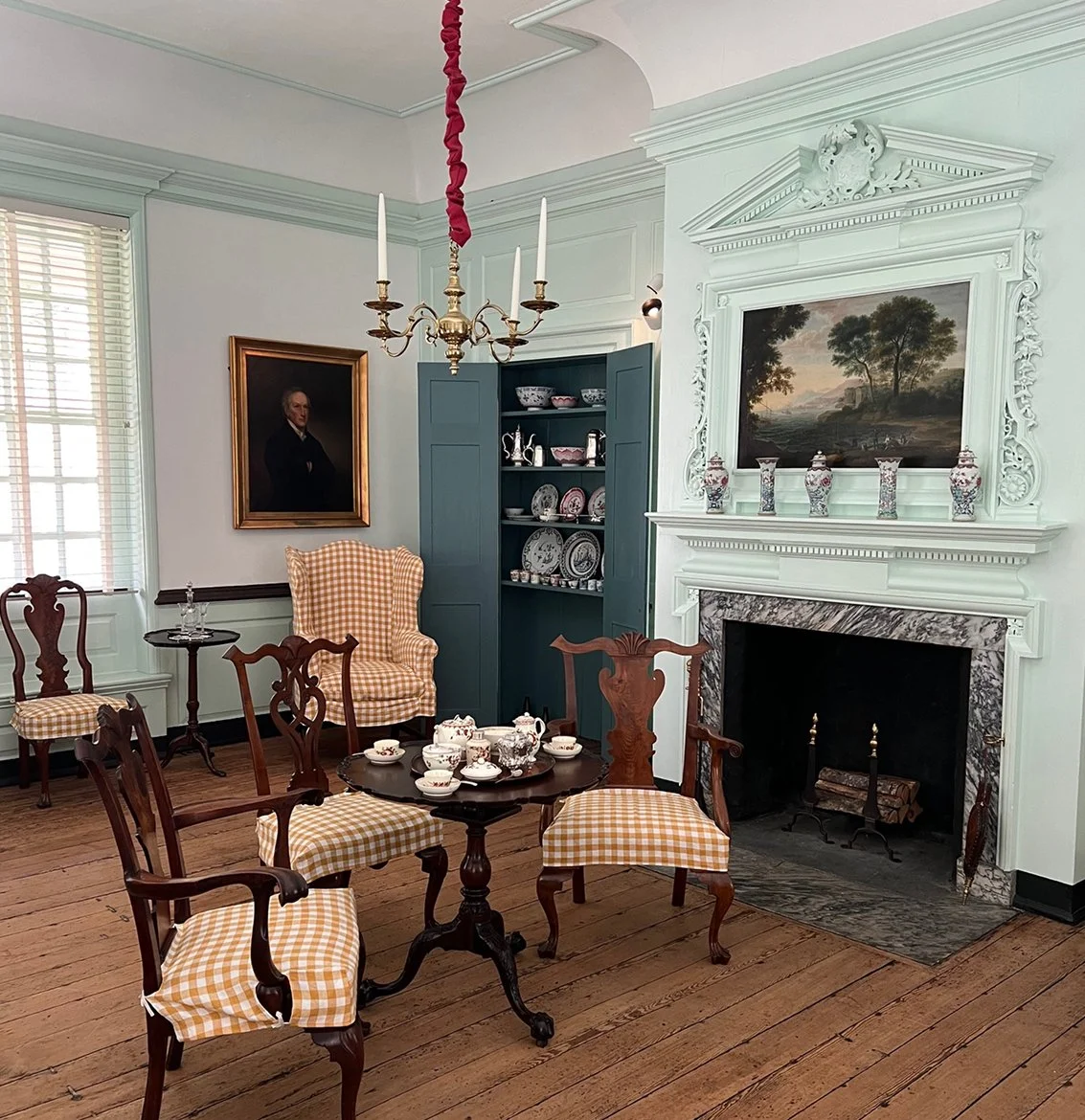
Bringing back the bowfat.
We recently restored a 1756 bowfat (china closet) in the Woodford parlor.
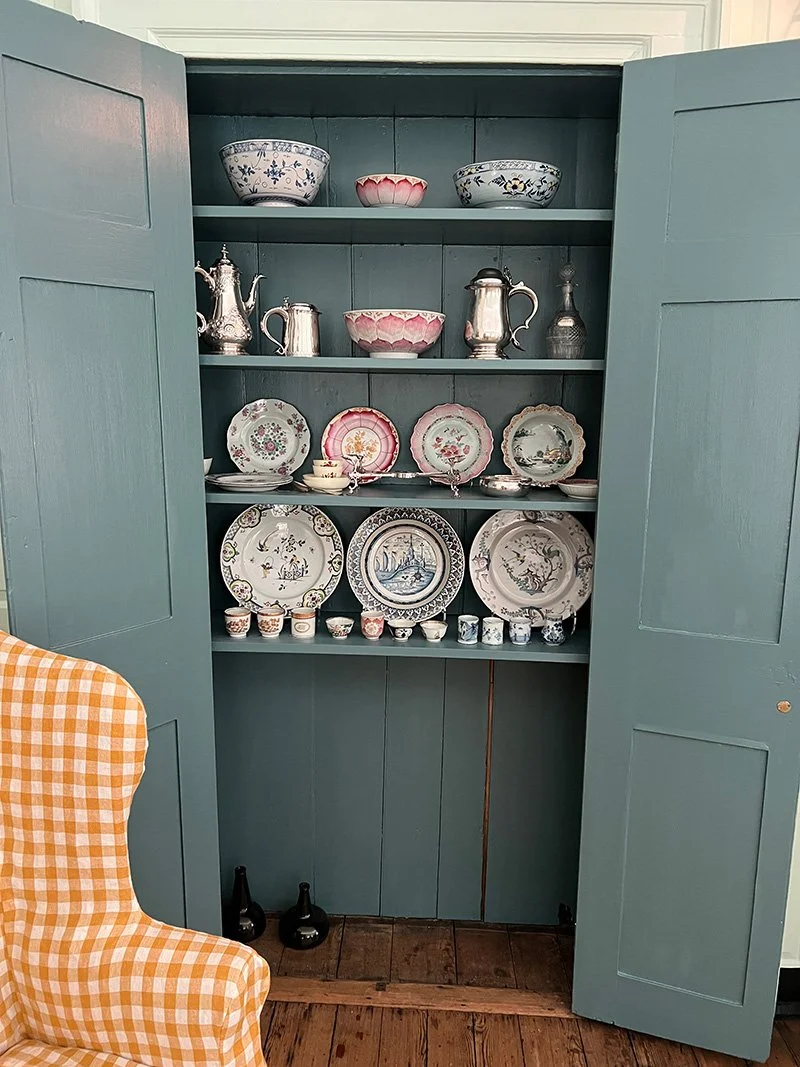
Woodford's early families used the Parlor as a dining room, a living room, a home office, and a place to take tea with friends and family. A bowfat, or china closet, would have been an important element of this versatile room. However, until 2024, the Woodford parlor closet only housed a 20th-century bookcase. Read on to learn how this space changed over time and the discoveries that led to its restoration. Today, visitors will see examples of Chinese export porcelain, silver, English Delftware, and other household objects displayed in the restored bowfat.
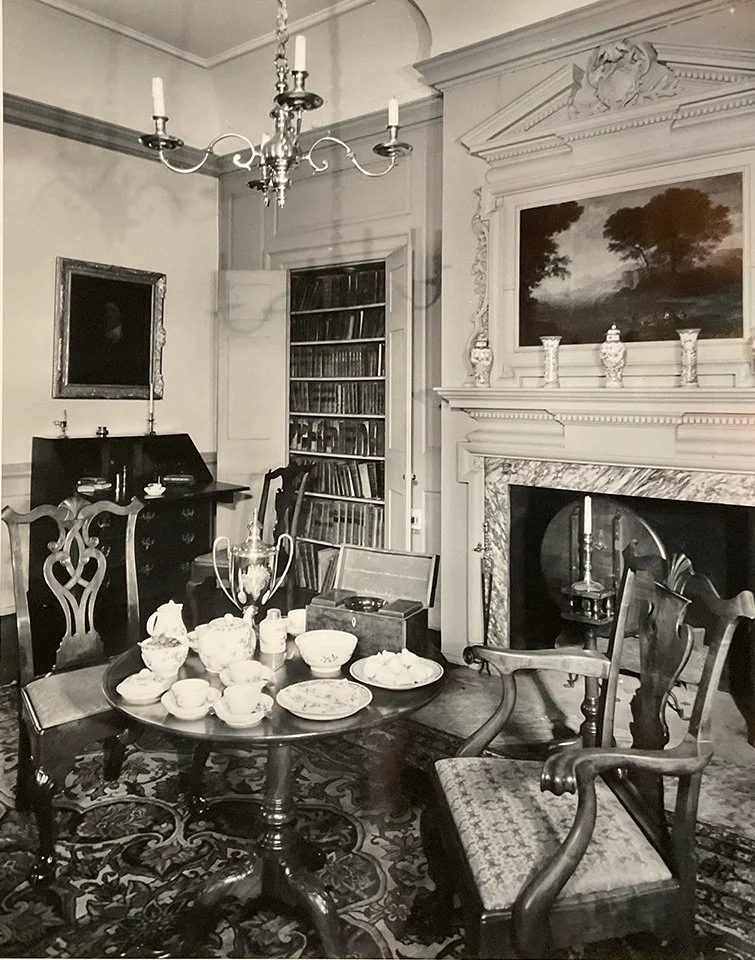
1756
When Woodford was built, the parlor had a china cupboard (bowfat or buffet) to the left of the fireplace.
A china cupboard/buffet/bowfat was a standard feature in the home of a wealthy person at this time. Separate dining rooms and related furniture such as sideboards had not yet come into being. In Philadelphia, 18th-century buffets can be found at Stenton, Cliveden, Mt. Pleasant, and Powel House. Reproduction buffets are installed at Winterthur (Delaware) and Colonial Williamsburg (Virginia).
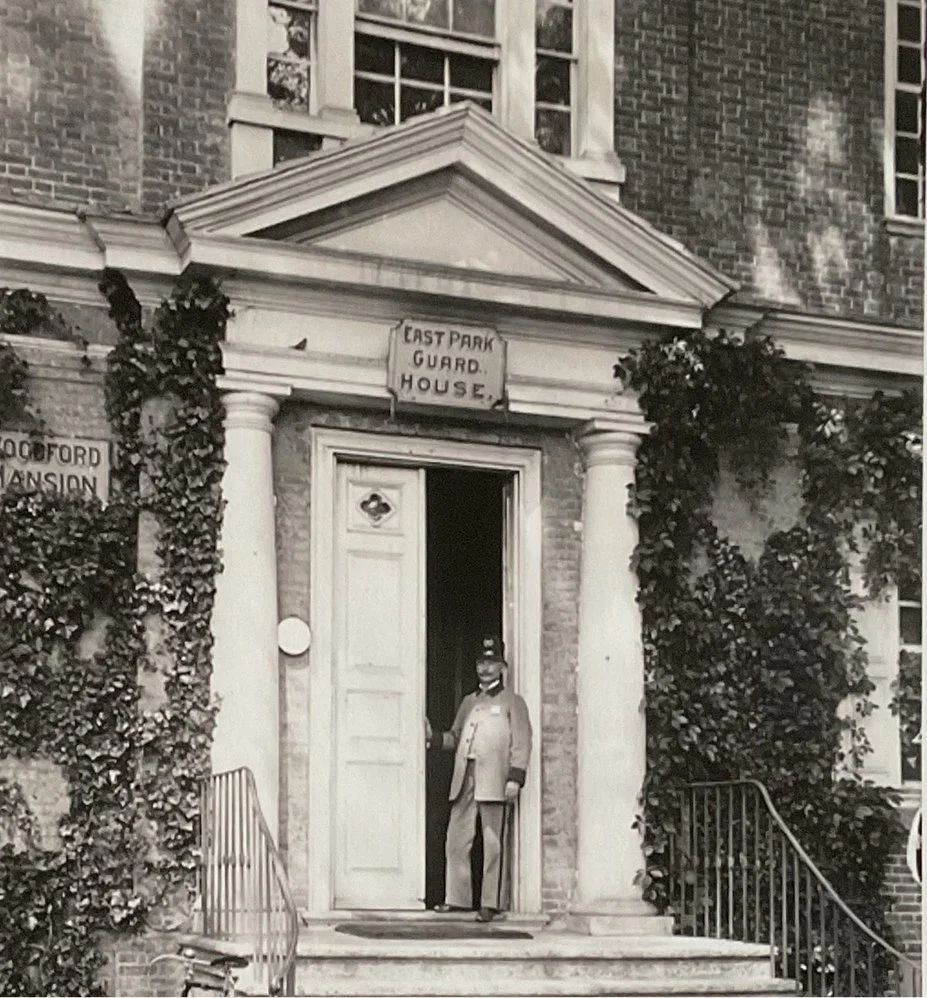
LATE 19TH CENTURY
Modification under the Fairmount Park Guards.
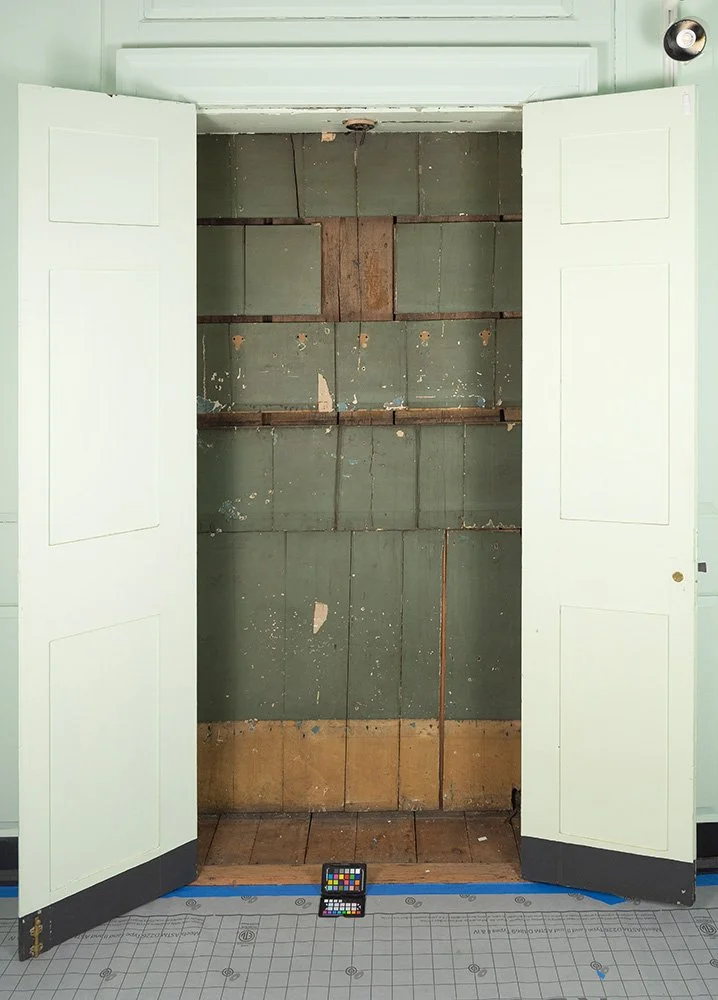
The buffet was most likely modified when it was used as the headquarters for the Fairmount Park Guards. Our restoration project uncovered physical evidence that the bottom two shelves were removed and a set of hooks were installed in this space. That leads us to believe they stored coats on the hooks and hats on the remaining original top two shelves.
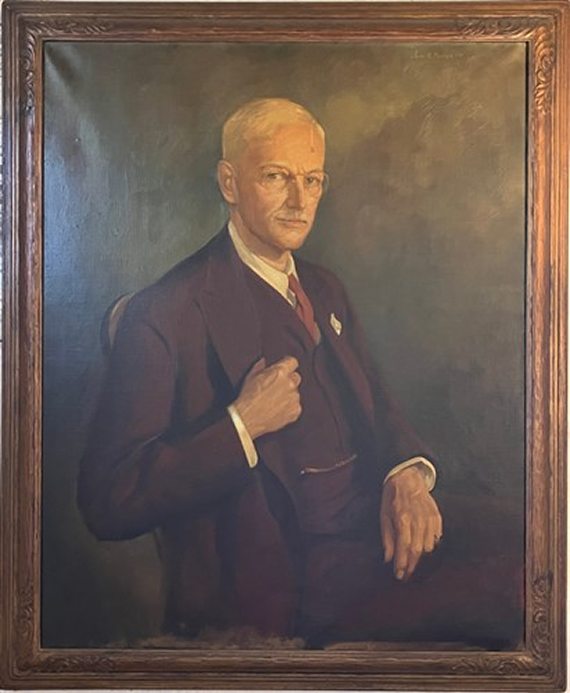
1927-1930
Transformations under architect John Sinkler.
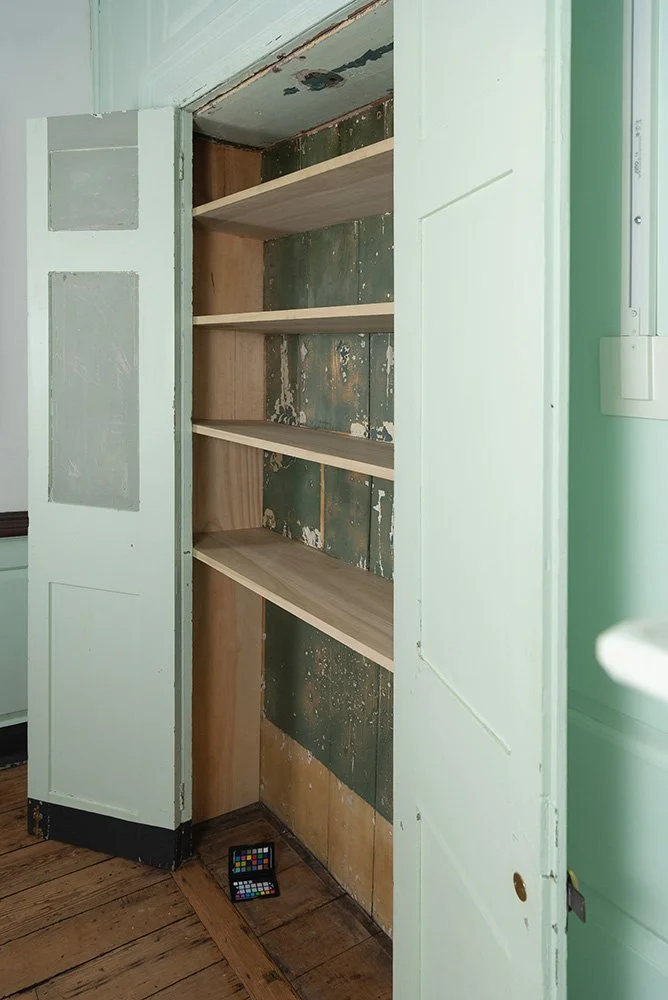
When the Naomi Wood Trust became the new custodian of Woodford in 1926, they worked with architect John P. B. Sinkler, former architect of the City of Philadelphia (1920-1924) and the future second trustee of the Trust (1943-1958). Sinkler spent three years modifying and updating the mansion to turn it into a museum. One enhancement he made was to transform the coat closet into a built-in bookcase to display Wood’s 17th- 18th- and 19th-century book collection. The carpenters added facing material to the back and side walls of the closet, removed and recycled the original top two shelves to fill in the new sides, and added adjustable shelving.
2018
Our investigation into the 18th century shelving.
The parlor is one of only two rooms original to 1756 (Front Entrance Hallway being the other). Yet the bookcase had shelves with metal adjusters, obviously not an original 18th-century feature. We decided to investigate what might be found behind the 20th-century shelving.
The Fairmount Park Conservancy worked with the Naomi Wood Trust to remove the 20th-century shelves, exposing the original rear wall of the closet. There, we could see spaces between the rows of original wall paneling where the four original shelves had once been housed. We could also see the evidence of the clothes hooks where they had once been attached.
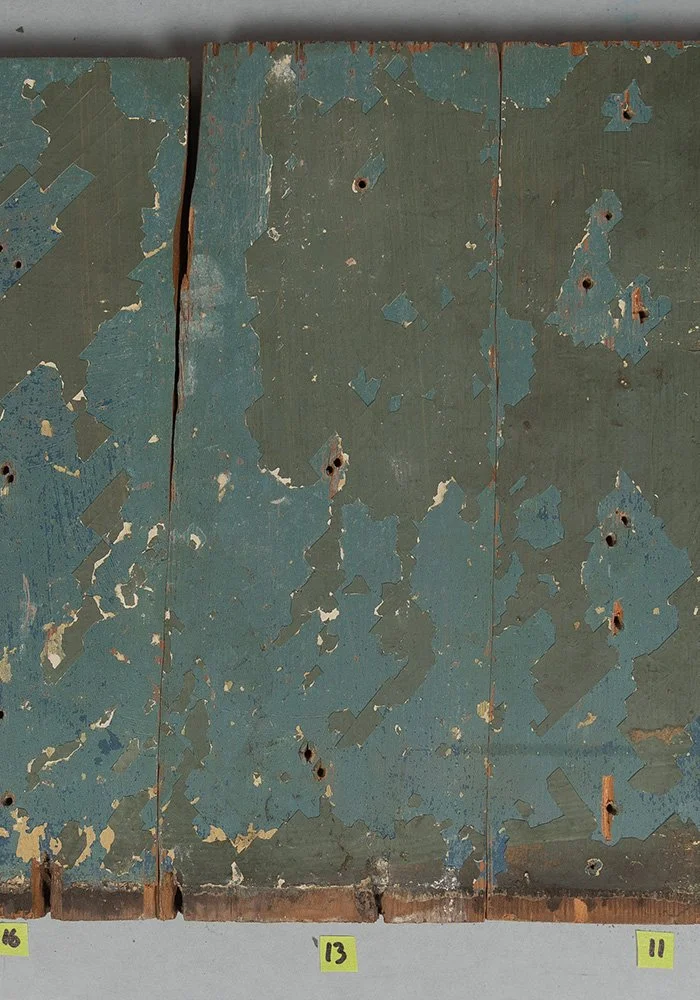
We carried out a historic paint analysis of the closet, which revealed that the color was made with a mixture of Prussian Blue and lead white pigments, and that the walls and the inside of the closet doors had been painted this color. So, we established the closet had once contained shelves.
What we did not know is what shape(s) the original shelves might have been, and whether they had been painted. In the 18th century, some buffets had elaborately shaped or scalloped shelves; others had plain rectangular shelves or a combination of styles. Some shelves were left unpainted or only painted on the leading edge, and some were fully painted. So, the question was–what did ours look like?
2024–2025
Independent conservator Jonathan Stevens examined the closet to create a historically accurate restoration based on physical evidence.
As Stevens removed additional wood that had been added to the side walls of the closet, he found what he believed might be remnants of the original closet shelves. These shelves had been cut up and recycled to space the new side walls of the closet from the original side walls. He was able to reconstruct fragments of the shelves and determine some of their original locations based on nail holes and paint evidence. This evidence strongly suggested that the original shelves were rectangular in shape, rather than a more ornate design, and showed that they were painted on their top and bottom sides as well as on their leading edge. The temporary removal of the original closet top during the project led to the discovery of early construction materials that had been discarded inside the walls, including a hand-forged iron chisel, likely used either in the construction of the original mansion between 1756-1758, or during construction of the David Franks addition in 1771-1772.