

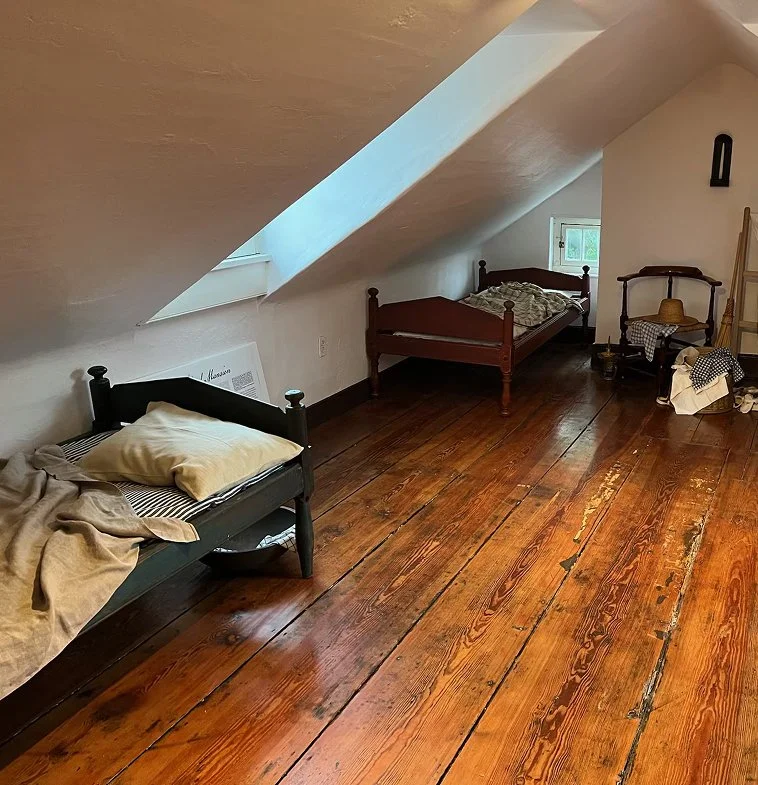
Woodford’s enslaved residents.
At least three of Woodford's first five owners owned enslaved African people during their lifetimes: William Coleman, David Franks, and Thomas Paschall. Woodford’s attic garret, accessed only via a back servant’s staircase, is restored and furnished to show how enslaved African or indentured servants would have lived there in the 18th century.
Slavery was abolished in the Commonwealth of Pennsylvania in 1780, though it took some time for the law to take hold. The author of Pennsylvania’s abolition statute, William Lewis, rented Woodford for a time when he was having his summer home built. Today that home is known as Historic Strawberry Mansion.
Azmin, Hagar, and Philae.
William Coleman’s 1768 will provides crucial insight into the identities of enslaved people at Woodford. It named three of the earliest known residents—Azmin, Hagar, and Philae—about whom little is otherwise recorded. Drafted while he was in ill health, Coleman’s will stipulated that his “plantation on 12 acres” be sold upon his death, with the proceeds used to pay these three women, cover any legal fees associated with their manumission, and secure their freedom along with that of their children. The children were to be placed as apprentices with a “reputable person or persons” in order to learn a trade.
Note: Although some German Quakers opposed the practice of slavery from a very early time, the Quakers as a whole did not formally bar slaveholding Friends from retaining their membership in their congregations until 1775.
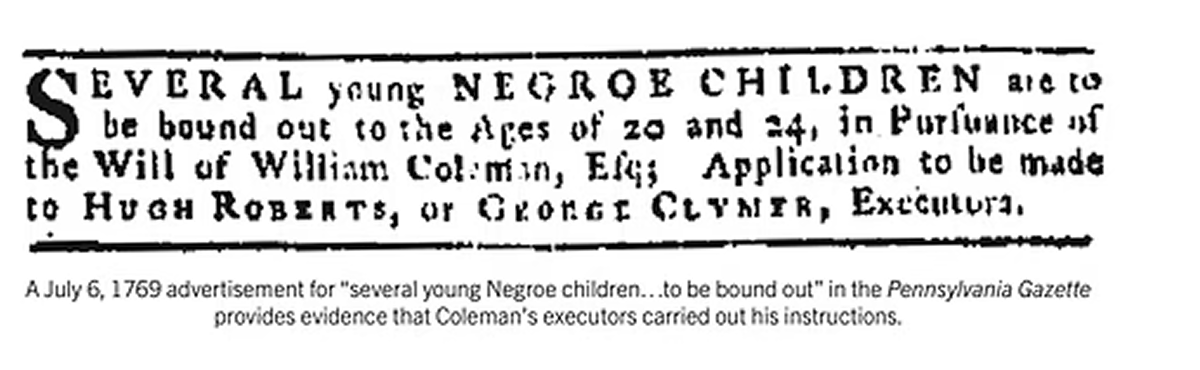
“And my will is that the money arising by such sale be applied in manner following Viz; Twenty Pounds apiece I give to my three grown Negroes, to wit, Azmin, Hagar, and Philae, whom I desire and order to be set free in Twelve Months after my decease; and as to the negro Children of the said Hagar and Philae, I desire and order that they be placed our apprentices to some reputable Person or Persons, who will undertake to cause them to be taught some Trade or Business, whereby they may probably be enabled to get their Livelihood…”
— William Coleman’s last will, 1768

Greenwich, Peter, Cuffy and the cargo of the Schooner Hannah.
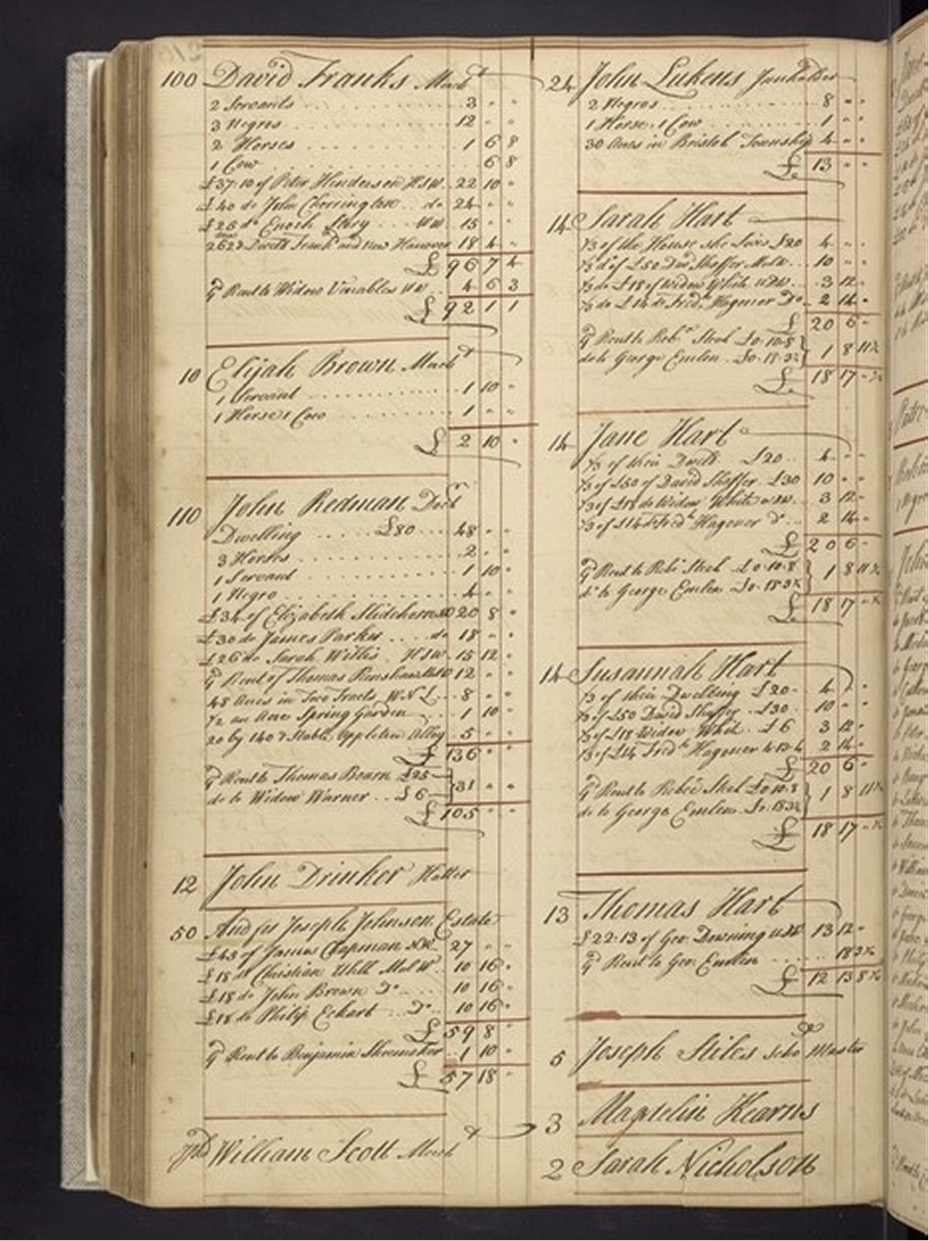
A few years before David Franks acquired Woodford, Philadelphia records show him being taxed for three enslaved African servants and two indentured European servants. But Franks’ involvement with enslavement began many years earlier. In 1747, he placed an advertisement in the Pennsylvania Gazette seeking the return of an escaped man named Greenwich. In a 1761 Pennsylvania Gazette ad, Franks promoted a recent shipment of goods on the Schooner Hannah, including a “cargo of likely negroes (sic).” One year later, Franks partnered with former Philadelphia Mayor William Plumstead to import a second cargo of enslaved people from West Africa.
Later runaway advertisements in the Gazette tie Franks either directly or indirectly to the enslavement of two other enslaved men–Peter and Cuffy. Peter is believed to have served as a coachman for Franks a few years before Franks purchased Woodford. Franks sold Peter to another enslaver in New Jersey and, in 1771 and 1773, Peter ran away from that enslaver. Cuffy, who was enslaved by one of Franks’ business partners and labored in Franks’ tallow candle making factory, ran away in September 1762.
Slavery and Thomas Paschall.
Thomas Paschall bought the Woodford Mansion from Franks in 1788. Though he never lived there, tax records tell us Paschall also owned enslaved people.